You know that recipe you saved six months ago? The one for the ridiculously good chocolate cake you swore you'd make again? Yeah, good luck finding it.
- Your Camera Roll Is Not a Cookbook
- Not All Recipes Come From the Internet
- Give Your Recipes a Little Organization
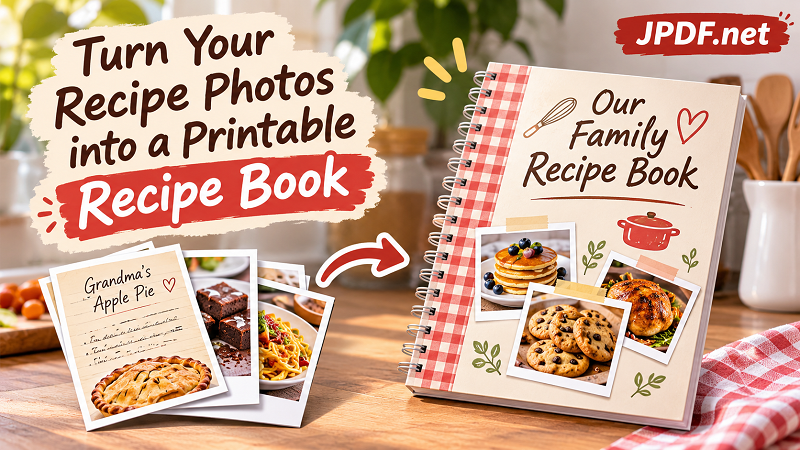
- Turn Your Recipe Photos Into a Real Cookbook
- What Makes a Recipe Book Worth Using?
- Before You Hit Print, Give It One Last Look
- Make Something Your Family Can Keep
It's probably somewhere between 47 screenshots, a picture of your friend's dog, three grocery receipts, and that blurry photo you accidentally took while unlocking your phone.
Most of us have quietly built a recipe collection without even realizing it. Some recipes come from Instagram, others from Pinterest, family group chats, old handwritten notebooks, or random photos taken in the kitchen. The problem isn't finding good recipes anymore. It's keeping track of the ones that actually matter.
And here's an idea: instead of letting those recipes disappear into your camera roll, why not turn them into a personal cookbook? Not another complicated app, not a subscription-based recipe manager. Just a collection of your favorite recipes that you can save, print, share, and actually use.
Your Camera Roll Is Not a Cookbook
Think about how you collect recipes. You might screenshot a pasta dish while scrolling through Instagram, photograph your grandmother's handwritten recipe card, or save a picture of a dessert someone brought to a family gathering.
Over time, these little discoveries pile up.
The trouble is that your phone doesn't know the difference between a recipe worth keeping and a random screenshot of a delivery confirmation. Everything goes into the same giant digital drawer.
When you finally decide to cook something, you end up searching through old photos, zooming into tiny text, and trying to remember whether the recipe was saved in your gallery, a messaging app, or somewhere else entirely.
A personal recipe book gives those scattered pieces a home. More importantly, it turns something you've been collecting passively into something you can enjoy actively.
Not All Recipes Come From the Internet
Some of the best recipes you'll ever cook won't come from a food blog or a viral cooking video. They'll come from people you know.
Maybe your mom has a handwritten recipe for chicken soup that she's never bothered to type out. Maybe your grandfather makes a special sauce without measuring anything. Or perhaps there's a dessert your family only prepares during the holidays.
These recipes are worth preserving.
A good personal cookbook can bring together several different kinds of food memories:
- Family recipes: Handwritten notes, old recipe cards, and dishes passed down through generations.
- Internet discoveries: Screenshots from Pinterest, Instagram, Facebook, and cooking websites.
- Personal experiments: Your own cooking notes, ingredient combinations, and dishes that turned out surprisingly well.
- Special occasions: Birthday cakes, holiday meals, family gatherings, and those dishes everyone keeps asking you to make again.
Don't worry about making everything look professional. A slightly messy handwritten recipe can have more personality than a perfectly formatted page from a commercial cookbook.
Give Your Recipes a Little Organization
Before turning everything into a book, spend a few minutes deciding how you want to arrange your collection.
There's no universal system here. The best organization is the one that makes sense when you're hungry, standing in the kitchen, and trying to figure out what to cook.
Organize by meal
This is probably the easiest approach. Create groups such as Breakfast, Lunch, Dinner, Snacks, Desserts, and Drinks. If you regularly cook for your family, this arrangement makes everyday meal planning much easier.
Organize by occasion
Not every recipe belongs to your daily rotation. Some are reserved for Christmas, Thanksgiving, birthdays, summer barbecues, or family reunions. Keeping these together means you won't have to hunt for that one special holiday dessert every year.
Organize by person
This is where things get interesting. Imagine having sections called Mom's Kitchen, Grandma's Recipes, Dad's Favorites, or My Own Creations. Suddenly, your cookbook becomes more than a collection of instructions. It becomes a record of the people behind the food.
You can even combine these approaches. Start with broad categories, then arrange individual recipes within each section.
Turn Your Recipe Photos Into a Real Cookbook
Now comes the fun part: bringing everything together.
You don't need to start from scratch or manually recreate every recipe. If you already have photographs of recipe cards, screenshots, or food instructions, those images can become the building blocks of your cookbook.
Step 1: Pick the recipes worth keeping
Start small. Don't try to organize every food-related image on your phone in one afternoon. Choose 10–20 recipes you genuinely enjoy or want to try.
Step 2: Check your images
Take a quick look at each image. Is the text readable? Are the ingredients visible? Did you accidentally crop out the cooking instructions? If a photo is blurry or incomplete, find a better version before adding it to your collection.
For handwritten recipes, make sure the lighting is good enough to distinguish individual words and measurements.
Step 3: Decide on the page order
Put your recipes into a logical sequence. You might want breakfast recipes first, followed by main courses and desserts. Alternatively, arrange them by family member or occasion.
A little planning here saves plenty of frustration later.
Step 4: Combine your images into one document
Once your images are ready, you can convert a jpg to a pdf to bring your individual recipe pictures together in a single document.
Instead of sending 15 separate image files to someone, you'll have one collection that's easier to open, store, print, and share. You can also use a PDF tool to combine additional pages whenever your recipe collection grows.
Step 5: Give the finished collection a proper name
Don't leave your file sitting around as IMG_8472_final_final.pdf.
Give it a name you'll recognize, such as Family_Recipe_Book.pdf, Grandma_Kitchen_Collection.pdf, or Favorite_Desserts.pdf.
It sounds like a small detail, but future you will appreciate it.
What Makes a Recipe Book Worth Using?
A cookbook doesn't have to look like something you'd find in a bookstore. In fact, the most useful ones are often personal, practical, and a little imperfect.
Still, a few details can make a big difference.
Readable recipes matter more than fancy design. If you're constantly zooming in to read ingredient measurements, the collection isn't doing its job. Make sure the original photographs are clear enough to use.
Keep the order predictable. Whether you organize by meal, occasion, or family member, stick with the same logic throughout the document.
Don't forget the little details. Cooking temperatures, preparation times, ingredient quantities, and handwritten notes can be just as important as the recipe title.
Think about how you'll use it. A digital collection is convenient on a phone or tablet. A printed copy might be better if you prefer having recipes on the kitchen counter without worrying about a screen getting covered in flour.
And here's a personal favorite: leave room for future additions. The best recipe collections are never really finished.
Before You Hit Print, Give It One Last Look
You've gathered the recipes, arranged the pages, and created your document. Before sending it to the printer, take a moment to review the whole thing.
Check that no recipe has been accidentally duplicated, images aren't cut off, and the pages appear in the right order. If some images are portrait-oriented while others are landscape, make sure they still look comfortable to read.
Also consider the paper size. Standard Letter or A4 paper works well for most home recipe collections. If you're planning to put the pages into a binder, leave enough room along the binding edge.
One more thing: don't sacrifice readability just to squeeze everything onto fewer pages. Saving two sheets of paper isn't worth turning a perfectly good recipe into a tiny wall of text.
Make Something Your Family Can Keep
There's something special about a recipe that has a story behind it.
Maybe it's the cookies your mother made every Sunday. Maybe it's a dish your family always prepares during the holidays. Or maybe it's a completely improvised meal that somehow became everyone's favorite.
These little things deserve more than a forgotten screenshot buried somewhere in your phone.
A personal recipe book is a simple way to bring them together. You don't need expensive software, professional photography, or a complicated publishing process. Start with the pictures you already have, organize the recipes that matter, and build your collection one page at a time.
And who knows? A few years from now, someone in your family might open that little cookbook, find an old handwritten recipe, and make the same dish all over again.
That's a pretty good reason to start saving those recipes today.